News Flash
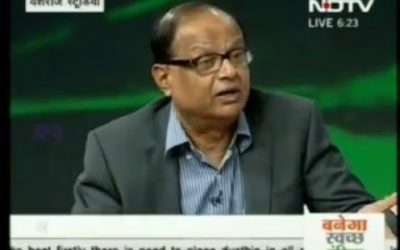
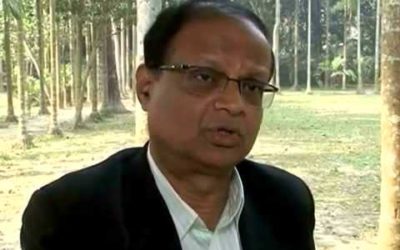
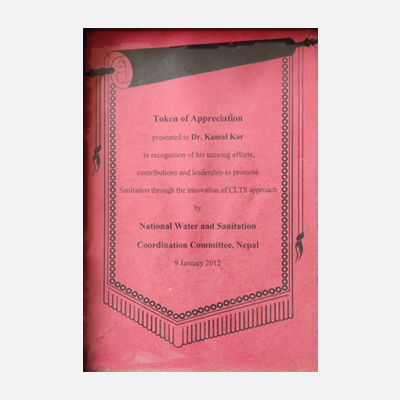
1. Kamal Kar's 'community-led total sanitation' is the new mantra for a global toilet revolution and Kamal Kar-the Sanitation guru. click here for more
2. Ghana needs a miracle to achieve sanitation goals by 2015 said the Environment Minister 'Dr Mustapha Ahmed. Click here ...
3. Sanitation Minister Jairam Ramesh promises to make India an open defecation free nation in ten years. Click here more details
4. Going by the present pace of progress, India will achieve the millennium development goals (MDGs) on sanitation only by 2054 according to WHO and UNICEF's Joint Monitoring Programme for Water Supply and Sanitation (JMPWSS). click here for more details...
5. Dr. Kamal Kar was invited by Veolia Foundation and the WHO to talk at the Cholera session on 13th March on the impact of CLTS in reducing cholera at the 6th World Water Forum in Marseille. To see his presentation please click here...
6. He was also a panelist in the the target session "Looking beyond MDGs:Basic sanitation and hygiene for all"organised by WSSCC on 14th March.
7. On 15th he participated in a panel discussion with Archana Patkar (WSSCC ) and Tom Slaymaker (Water Aid) on 'Some for All' organized by the STEPS centre of IDS, Sussex, UK. For details click here...
8. Alternatives to conventional sanitation in Chad, as elsewhere, does not depend on the application of particular technologies: it depends principally on the participation of the future users (from the design to the follow up) as reported by Julie Patinet of Groupe URD and Anne Delmaire of Toilettes du Monde. Click here ...
9. “Open defecation continues to be a big concern for the country" says Census Commissioner C Chandramouli as 77% of homes in Jharkhand, 76.6% in Orissa and 75.8% in Bihar do not have toilets depicting that its high time for India to bring a change. Click here ...
10. The Northern Regional Environmental Health Officer Mr. Steve Adongo has commended communities in the Yendi Municipality of Northern Region of Ghana for achieving ODF status sing CLTS approach.
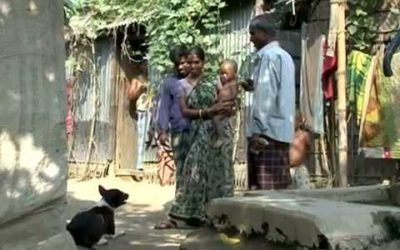
11. Dr. Kamal Kar, Chairman, CLTS Foundation and Priyadarshini Ghosh, visited Haripur Gram Panchayet in the Namkhana block of South 24 Parganas, West Bengal on 25th January 2012 to see the status of the implementation of CLTS by GOAL India (an Irish NGO).
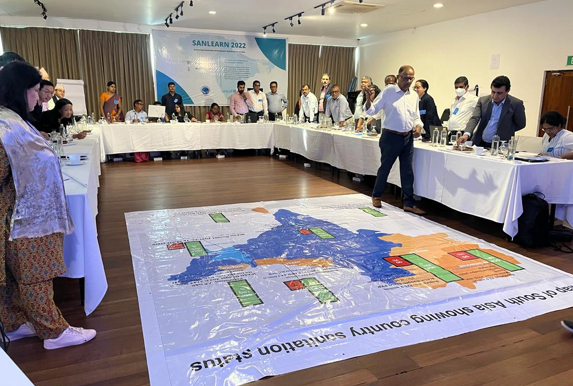
12. On invitation from the Rural Water Supply and Sanitation Project (RWSSP) - Western Nepal, Dr.Kamal Kar, Chairman, CLTS Foundation visited Nepal, Pokhra between 2nd and 9th January 2012 to review the practice of CLTS including training and assisting capacity building for the project staff.
13. Rose George reports from Fishtown in Liberia on President Ellen Johnson-Sirleaf, CLTS and why sanitation is still not being seen as a priority by many politicians and communities. For further details please click here.
14. Indian Minister for Rural Development points at community-led approaches to address the country's sanitation access and needs while launching India Human Development Report, 2011" Click here for more information.
 
CLTS Global Map
Click here >
 
CLTS Photo Gallery
More >
 
CLTS Downloads
 
Our Partners
SuSanA
IDS
IRISH AID
 
 
    Link |  Site map
 
Introduction Foundation Our Work Our People Our News Our Contact
COMMUNITY LED TOTAL SANITATION
Changing lives...for a better tomorrow

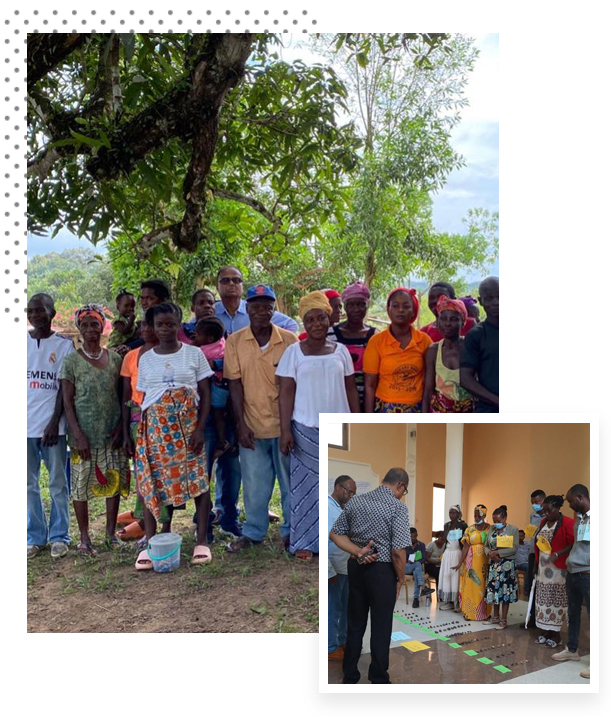
Today it is widely accepted that Community Led Total Sanitation (CLTS) is one of the most effective and successful approaches to achieving open defecation free communities. Pioneered in Bangladesh in 1999-2000 by Dr. Kamal Kar, the approach is now being implemented in 43 countries in Asia, Africa and Latin America.

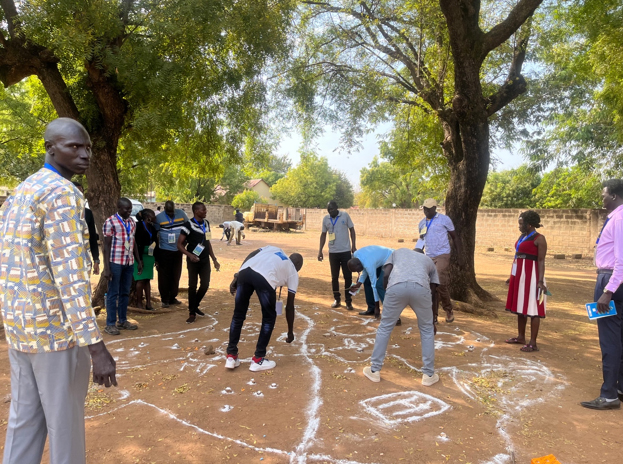
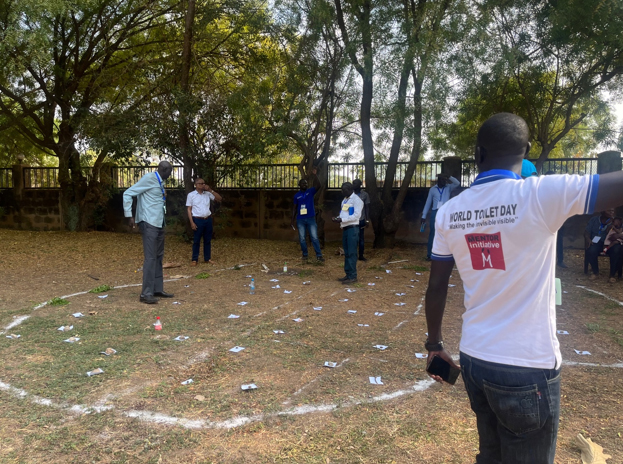
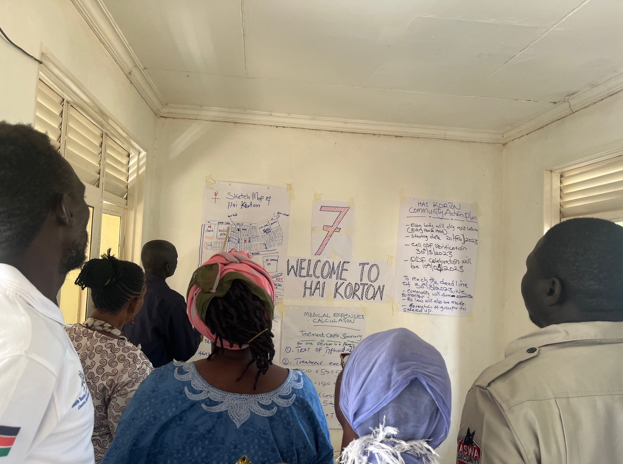
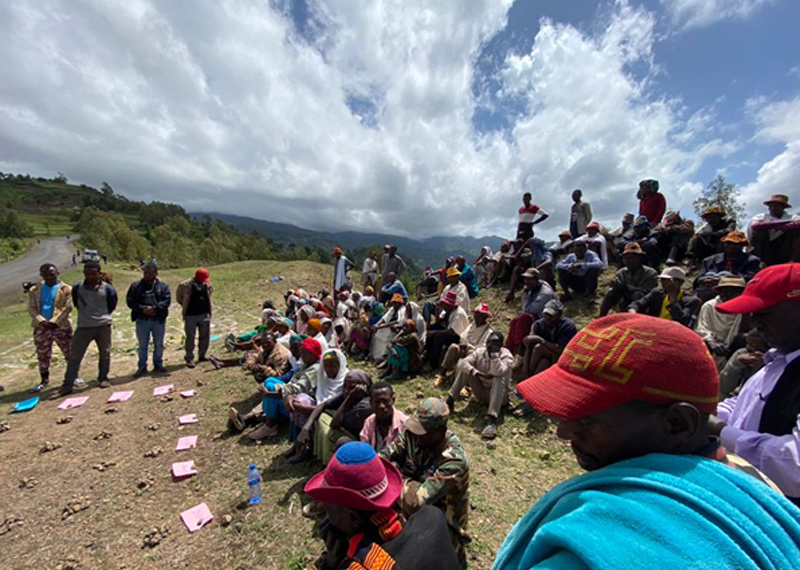
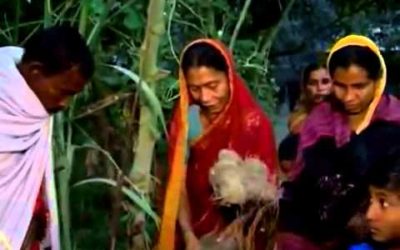
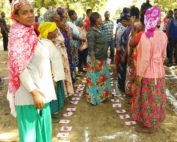
When triggered the feeling of ‘disgust’, ‘shame’, ‘self-respect’ and ‘fear’ prompts a self-realization amongst the individuals as well as the entire community of the negative consequences on health, environment and economy such as chronic illness, poor drinking water quality, workdays lost, medical expenses and consequent impact on livelihood. CLTS is triggered through  hands-off facilitation and  participatory analysis of a community’s  sanitation profile , which stimulates the basic  desire to avoid contact with human excreta. Self-respect, shame, disgust and fear of contamination drive communities towards an urgent collective local action to get out of the filth. These considerations then drive women, men and children to collectively work to create Open Defecation Free (ODF) communities. 

One of the major contributions of CLTS has been to illustrate that externally imposed ‘hardware’ prescriptions do not work. Hardware prescriptions emphasize toilets, rather than safe confinement of excreta, and therefore divert attention from the self-realization process that is essential to achieve collective behavior changes. Further, studies have revealed that subsidy schemes to ‘provide’ latrines do not lead to the desired outcomes, as these are often inappropriate or create divisions between the ‘have’ and ‘have-not’ communities. Moreover, they nurture the mentality of dependency through hand-outs which is contrary to transformative social processes. 

Today CLTS is being implemented in many countries across the developing world and at least five countries have adopted CLTS in their respective national sanitation policies. A multitude of global organizations – UNICEF, WSP, Water Aid, Plan International, IRC, CARE, Bill and Melinda Gates Foundation –have to an extent adopted the CLTS approach and are sporadically funding and supporting national and local NGOs in Asia, Africa and Latin America. However a complete understanding of the social and behavioural processes involved is necessary for effective implementation.